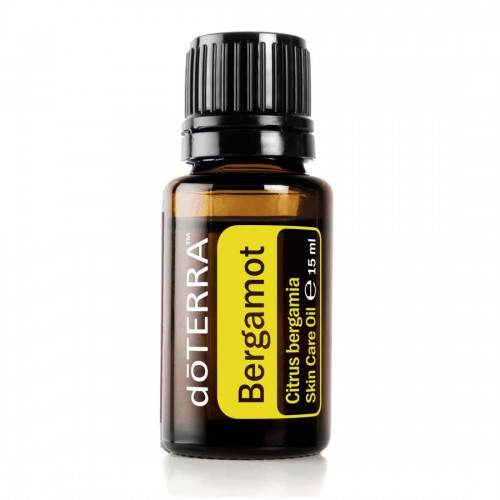
dōTERRA Bergamot Essential Oil - 15ml
Bergamot is cold pressed from the rind of the bergamot fruit, grown almost exclusively around Reggio Calabria on the southern tip of Italy. Unlike most citrus trees, bergamot is grown mainly as a fragrance crop rather than for eating, which says something about how highly its oil is regarded.
The aroma is brighter and greener than orange, with a more refined, slightly floral edge that sets it apart from the rest of the citrus family. It sits somewhere between a straightforward citrus lift and something closer to a fine fragrance, which is why it turns up so often in perfumery.
A few drops in a diffuser bring a fresh, sophisticated top note, and it pairs particularly well with florals like Lavender or woods like Frankincense underneath. Because it's phototoxic, most people keep topical use to the evening or to skin that won't see direct sun — see the cautions below.
Why people choose it
- A brighter, greener citrus aroma than orange, with a slightly refined, floral edge
- Cold pressed from the rind of bergamot fruit grown around Reggio Calabria in southern Italy
- Grown mainly as a fragrance crop rather than an eating fruit
- A popular top note in perfumery, layered with florals or woods
- Pairs well with Lavender, Ylang Ylang or Frankincense in a diffuser blend
How it smells
Bright and citrusy with a greener, more refined edge than orange — a touch of floral sophistication rather than straightforward sweetness.
How to use it
- In a diffuser
- Three to four drops in a diffuser, alone or blended with a floral or woody oil to soften the citrus top note.
- On skin
- Dilute well before applying to skin, and keep treated skin out of direct sun — see cautions.
- Dilution
- One drop of Bergamot to three or four drops of fractionated coconut oil for topical use.
- Worth knowing
- Because it's phototoxic, most people save topical use for the evening or for skin that won't be exposed to sunlight.
Details
- Botanical name
- Citrus bergamia
- Plant part
- Peel
- Extraction
- Cold pressed
- Key compounds
- Limonene, Linalyl acetate
- Size
- 15 ml
Safety
Possible skin sensitivity. Bergamot is phototoxic — avoid direct sun, UV or sunbeds on treated skin for up to twelve hours after topical use. Keep out of reach of children. If you are pregnant, nursing or under a doctor's care, speak to your practitioner before use. Avoid contact with eyes, inner ears and sensitive areas. Dilute with a carrier oil for topical use.
This information is for general use and is not medical advice. If you have a health condition, are pregnant or nursing, speak to your GP, midwife or pharmacist.
Blends well with
Common questions
What does Bergamot smell like?
Bright and citrusy, but greener and slightly more floral than orange or lemon, with a more refined edge than most citrus oils.
Why does Bergamot need special care before sun exposure?
It's phototoxic, meaning it can make skin more reactive to UV light. Avoid direct sun or sunbeds on treated skin for around twelve hours after topical use.
What does it blend well with?
Florals such as Lavender and Ylang Ylang soften it, while Frankincense or Cedarwood give it a deeper, woodier base.
Can I use it in the bath?
Yes, a few drops mixed with a carrier oil or bath dispersant work well — just avoid direct sun afterwards if it's been on your skin.
How is Bergamot different from other citrus oils in the range?
It's grown mainly for its fragrance rather than as an eating fruit, which gives it a more refined, less straightforwardly sweet aroma than Wild Orange or Lemon.